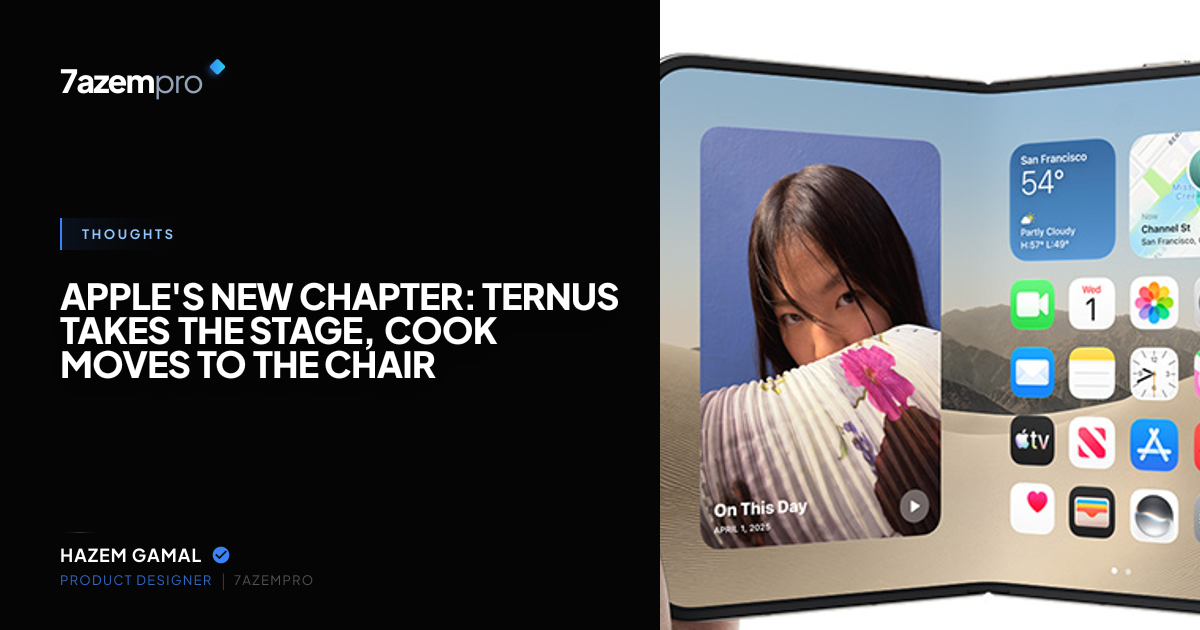
Apple's New Chapter: Ternus Takes the Stage, Cook Moves to the Chair
Apple's September 9, 2026 event, the first under CEO John Ternus: the foldable iPhone Duo, variable aperture on iPhone 18 Pro, a new Health Sensing System on Apple Watch Series 12 and Ultra 4, and AirPods 5. An engineering read on what ships with a date and what ships with a promise.

Tim Cook took over Apple in August 2011 as an operations and supply chain man. On September 1, 2026, John Ternus took the job as a hardware engineer. I read all five product pages rather than stopping at the keynote recap, and came away with one impression: Apple still wins where it manufactures, and still lags where it programs.

Quick answer: Apple announced five products on September 9, 2026. iPhone Duo, the first foldable iPhone, from $1999, available October 23. iPhone 18 Pro, the first iPhone with a variable aperture across four stops, from $1199. Apple Watch Series 12 with an all-new Health Sensing System, from $399. Apple Watch Ultra 4 with built-in Satellite Communications and up to 50 hours of battery, from $799. AirPods 5 with up to 1.5x stronger Active Noise Cancellation, from $129. Everything ships September 18 except iPhone Duo.
Who is John Ternus, and why does it matter that he is a hardware engineer?
Apple announced the transition plan on April 20, 2026, and Cook stayed CEO through the summer before moving to Executive Chairman on September 1. Four months between announcement and execution. That is not a rushed handoff. It is a schedule built the same way a product launch is built.
The résumé matters more than the dates. After Steve Jobs, Apple picked an operations man because the problem then was scale: how do you build a billion devices and get them everywhere. In 2026 it picked its Senior Vice President of Hardware Engineering. Read the choice as a signal and it says the next fight is inside the device, not in the logistics.
Cook described his successor as having “the mind of an engineer, the soul of an innovator, and a heart that leads with integrity and honor.” Word order in a sentence like that is not accidental at a company that reviews every statement letter by letter.
April 20, 2026: transition announced. August 31: Cook's last day as CEO. September 1: Ternus takes over. September 9: the first Apple Event of his tenure. All of it in the year of the company's fiftieth anniversary.
Five products, and a manufacturing fight behind each one
iPhone Duo
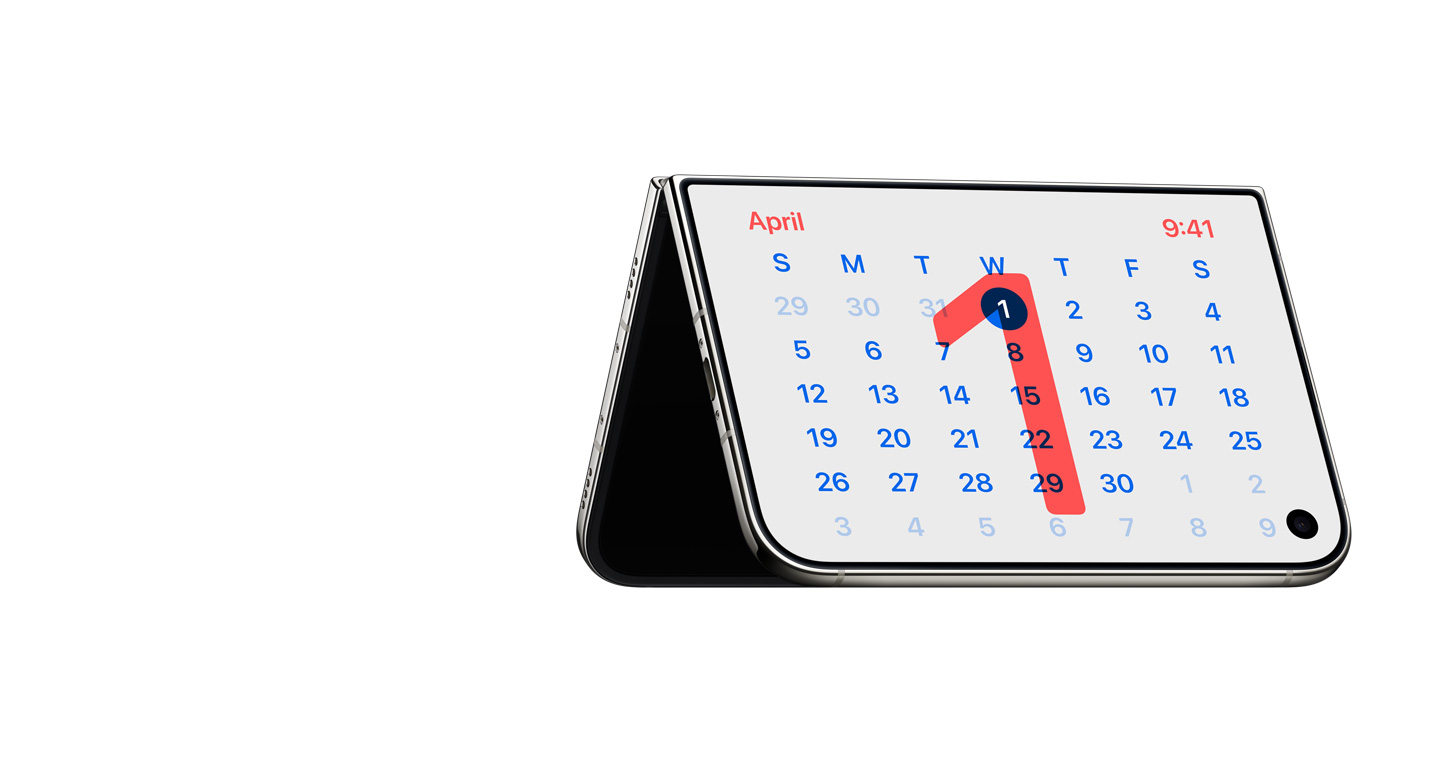
The first foldable iPhone. A 7.6-inch inner Super Retina XDR display, 50 percent larger than iPhone 18 Pro Max, and a 5.4-inch outer display at the same aspect ratio, both at 3000 nits peak brightness with ProMotion up to 120Hz. Pricing starts at $1999.
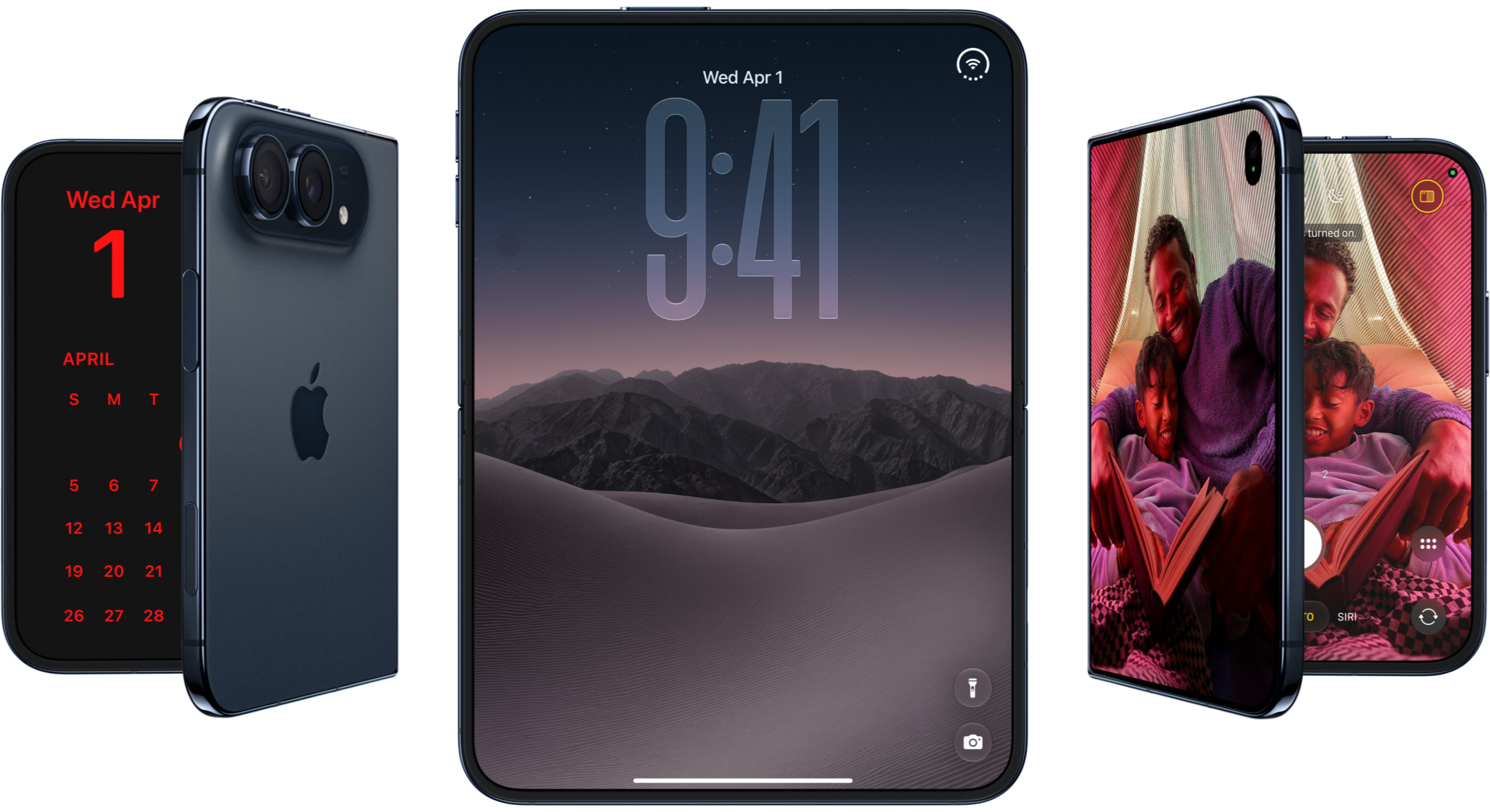

Apple entered this category years late, and what it got out of being late is buried in a single line on the spec page: optically clear adhesives let the ten display layers glide over one another as the screen folds. Every competitor in this category attacked the crease from the hinge. Apple attacked it from the materials sitting between the layers. That is a difference you do not see in week one. You see it after a year.
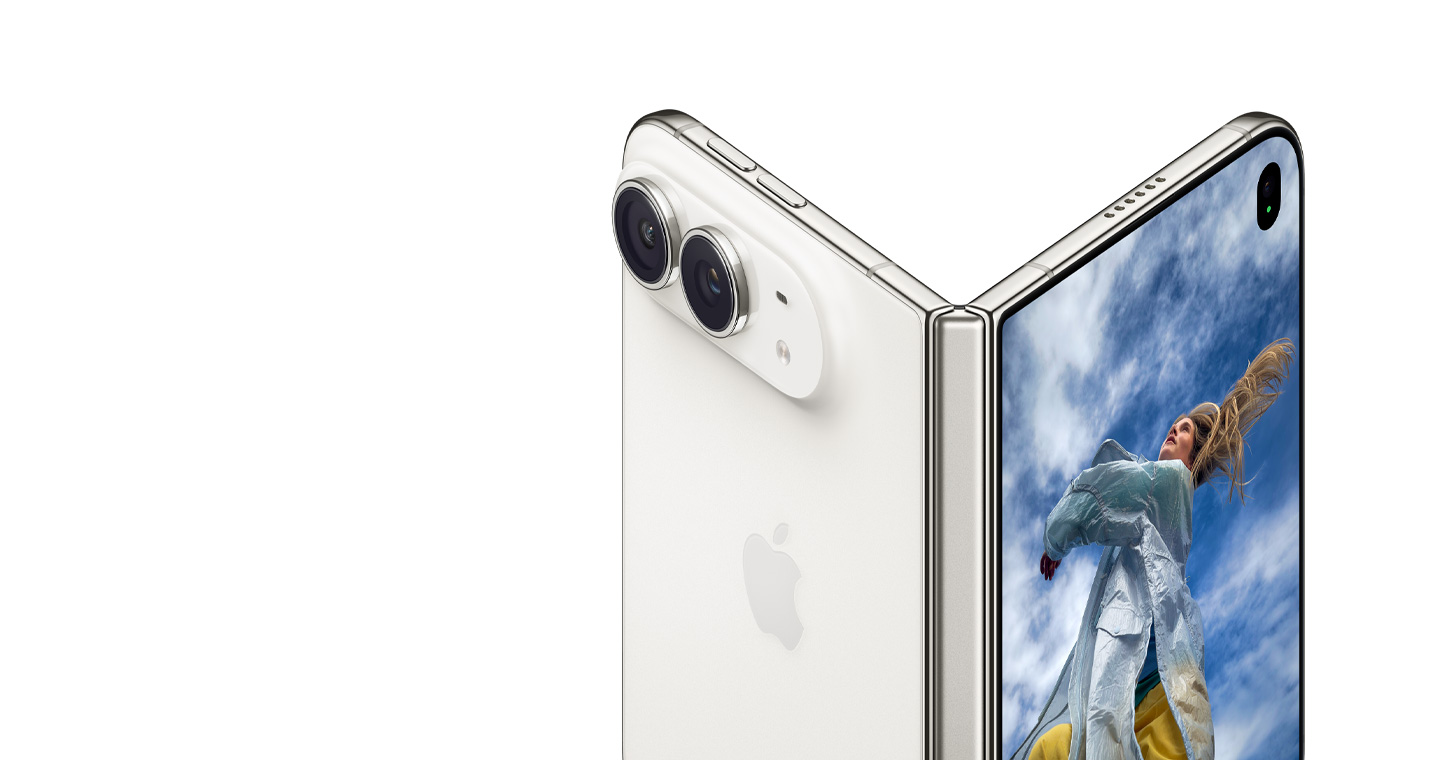
Two details show what was traded away to get this device out the door: it uses Touch ID in the side button rather than Face ID, and it is eSIM-only worldwide. The first because the Face ID array has nowhere to live in a two-screen device. The second because removing the SIM tray returns internal volume that becomes battery in the dual-battery system. These are not features. This is an internal space budget squeezed to the last millimeter.
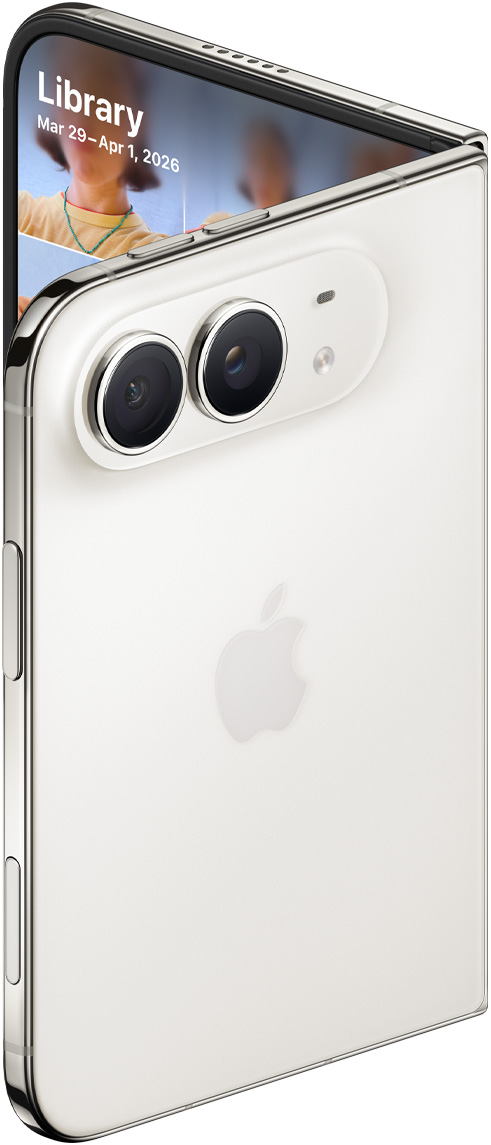
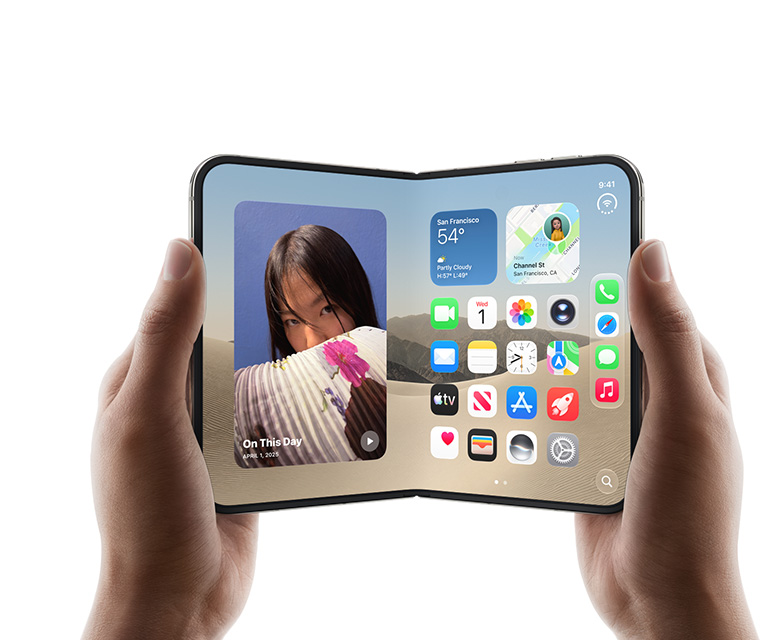
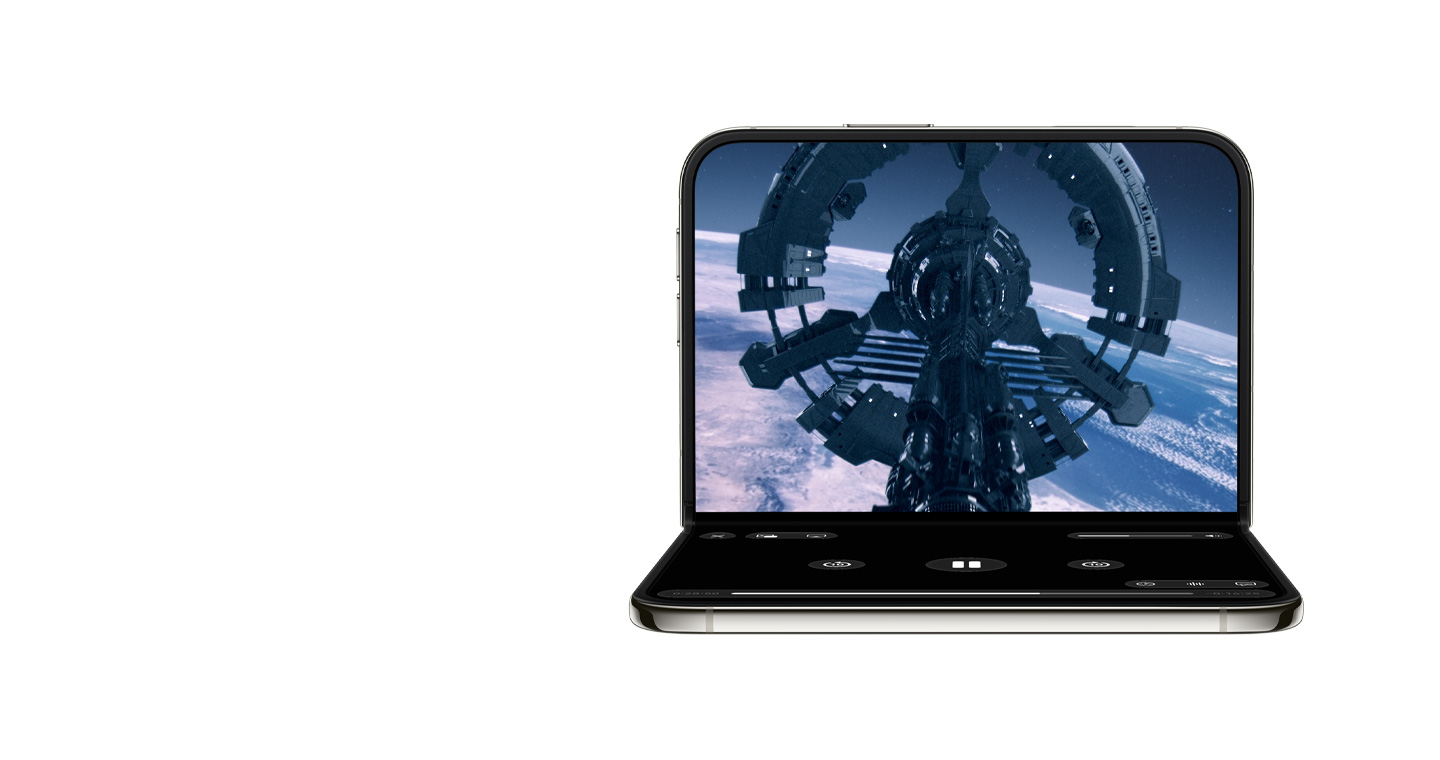
Six official postures: Landscape with Split View, Portrait, Closed, Seated, Standing with StandBy, and hands-free FaceTime. If you are building an app, that is six states to test, not one.
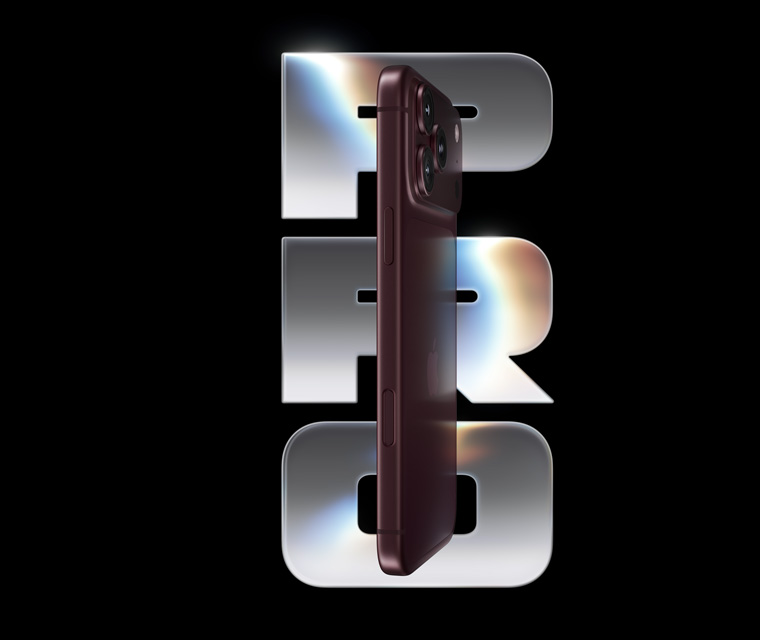
iPhone 18 Pro
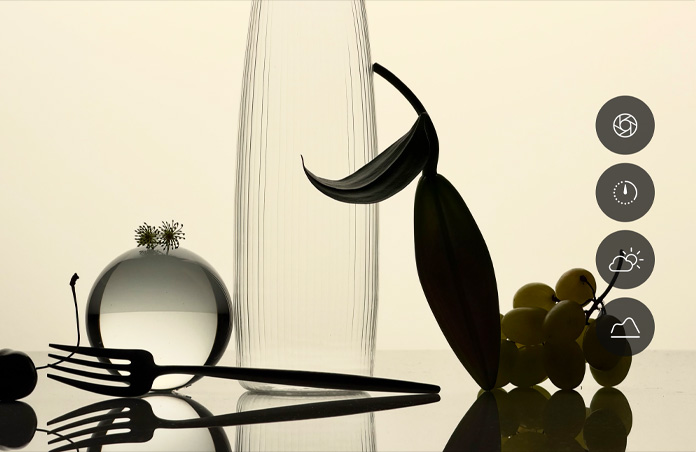
A 48MP Fusion Main camera with a variable aperture across four stops: ƒ/1.48, ƒ/1.8, ƒ/2.8, and ƒ/4.0. Every iPhone before this ran a fixed aperture, and depth of field control was a software simulation called Portrait Mode.
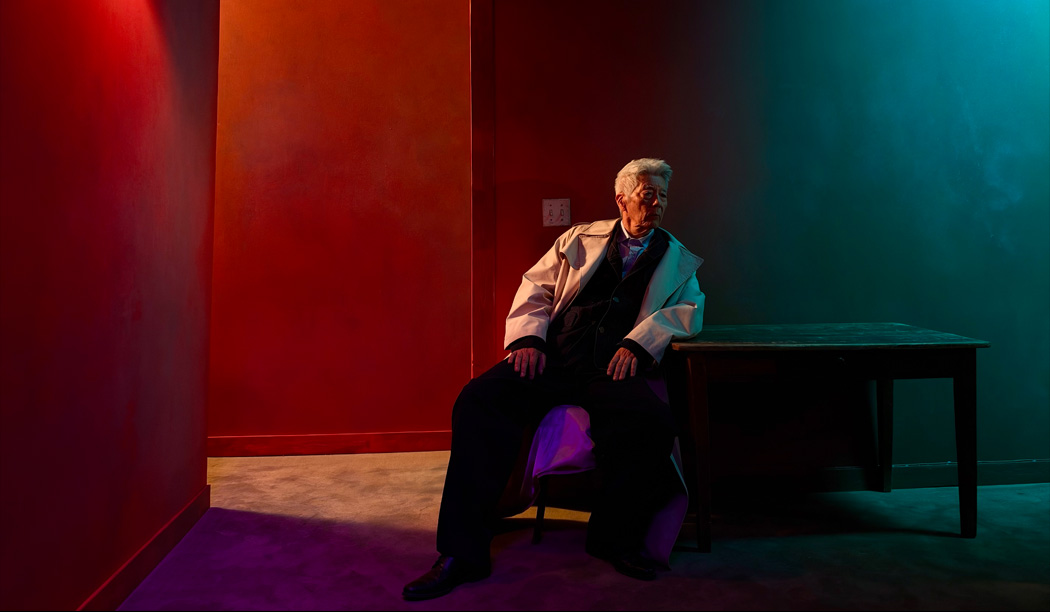
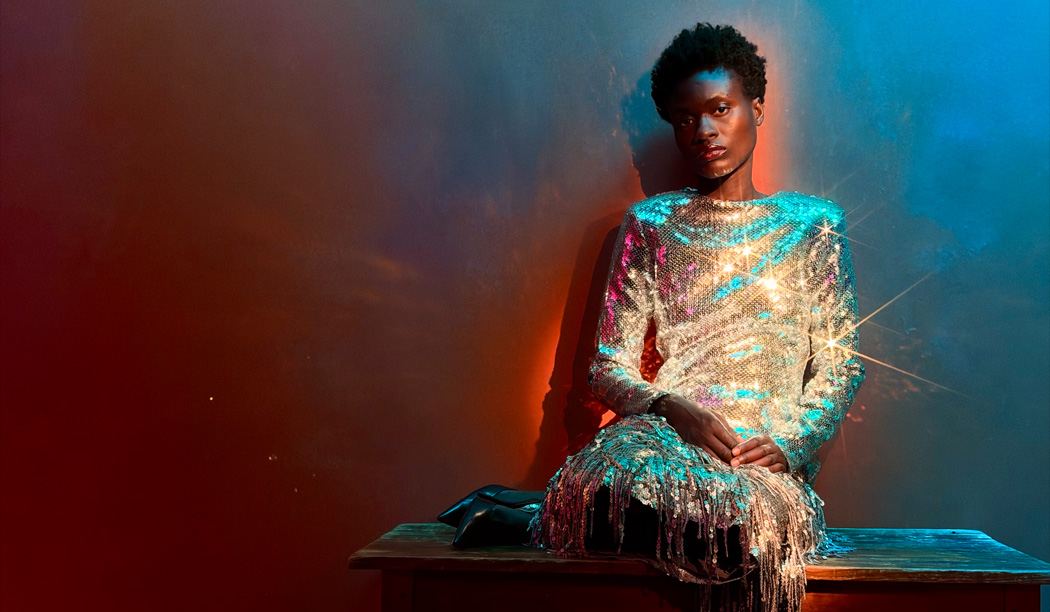
Four real mechanical stops mean moving blades inside a body millimeters thick, in the most dropped and shaken device anyone owns. This is a move from simulating the lens to shipping the lens. Alongside it Apple finally put full Pro controls in the Camera app: aperture, shutter speed, white balance, and histogram. For the first time Apple is selling photographers control instead of automation.
There is another line buried in that page I consider more important than the aperture itself, called Apple Reference Image: secure, pixel-level signing of photo data at the moment of capture, so you can verify exactly what the sensor saw. In a year when image generation became free and instant, a company that sells a billion cameras shipping a provenance standard in hardware is a bigger story than any megapixel number said on stage.

One number goes by fast and deserves a pause: a vapor chamber with three times the surface area lifts sustained performance 40 percent over iPhone 17 Pro, alongside 45 hours of video playback on iPhone 18 Pro Max and a 50 percent charge in around 15 minutes. If you shoot long video, the first number matters far more to you than the second.

The video section of that page deserves its own read. Cinematic mode can now be applied to regular video after the fact rather than during capture, which moves the decision from the moment of shooting into the edit. Alongside it: ProRes RAW, Apple Log 2, genlock for multicamera sync, and 4K at 120 fps in Dolby Vision. And Audio Mix now separates music and voices from unwanted background noise. This is a list written for people who work in video professionally, not for people filming passing clips.
Apple Watch Series 12
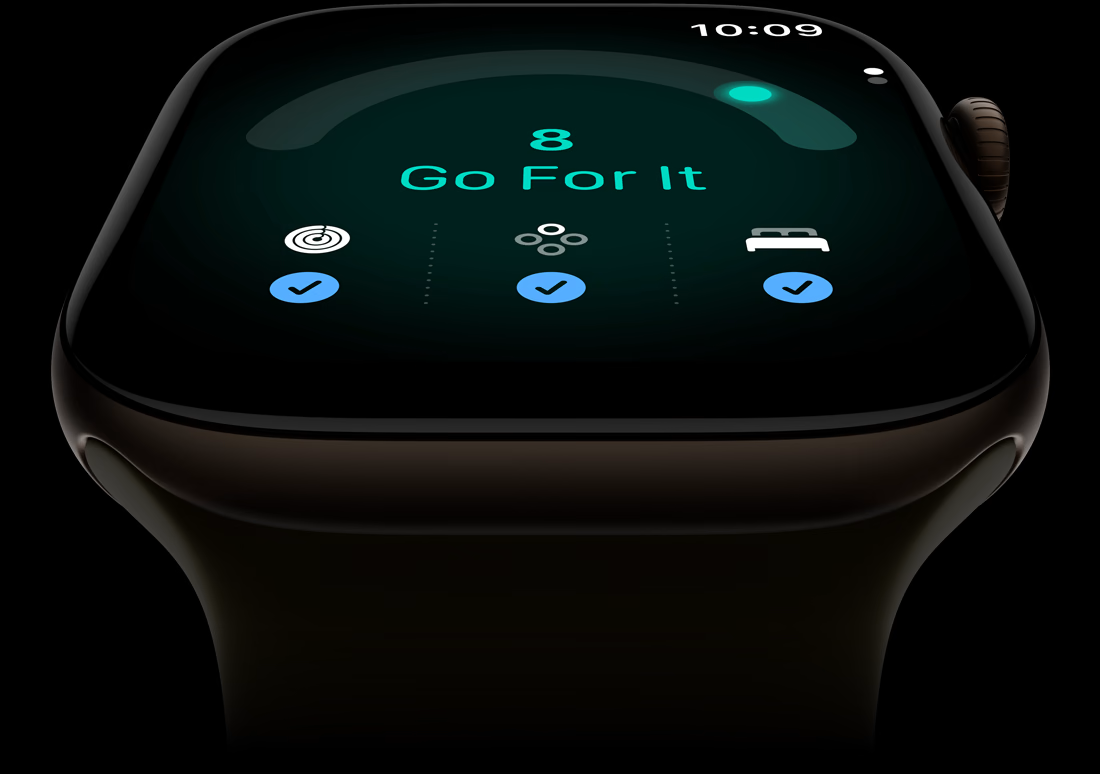
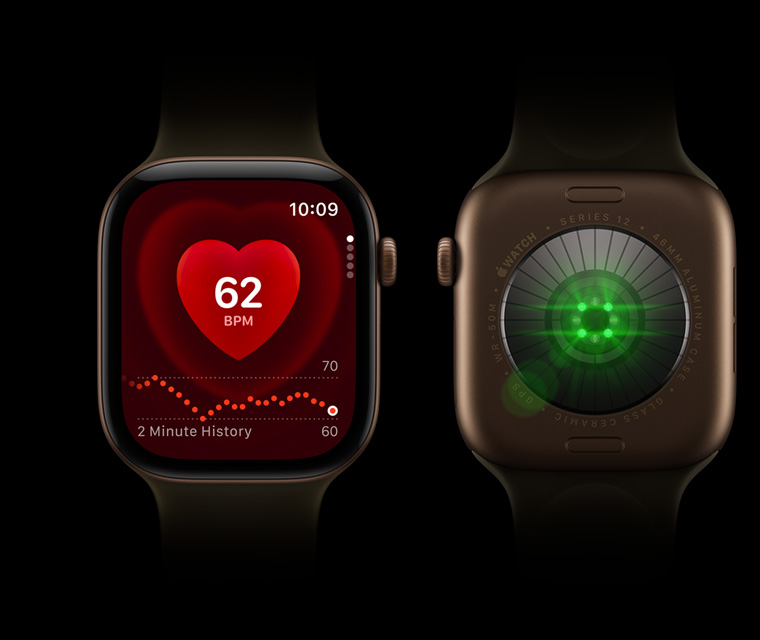
An all-new Health Sensing System working with the S11 chip, taking background heart rate readings every five seconds and HRV as often as every five minutes. That is 60x and 24x more frequent respectively than Series 11, and the price still starts at $399.
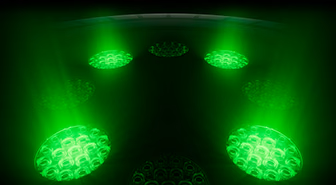
Optical heart rate sensing on a moving wrist is a signal-to-noise problem before it is anything else: sweat, hair, skin tone, motion. Read Apple's description closely and the fix is not a smarter algorithm. It is larger, more power-efficient green LEDs. More light means a stronger signal, and better efficiency means you can sample sixty times more often without the battery paying for it. The win is physical first and computational second.
But look at how hypertension notifications are worded. The algorithm analyzes patterns over 30-day periods and then tells you it has identified possible patterns of hypertension. That is not a blood pressure measurement and it is not a diagnosis. It is population-scale screening that turns the user into their own clinician. Genuinely useful, but the gap between an indicator and a diagnosis is exactly what has to land clearly if you are building on this data.
Apple Watch Ultra 4
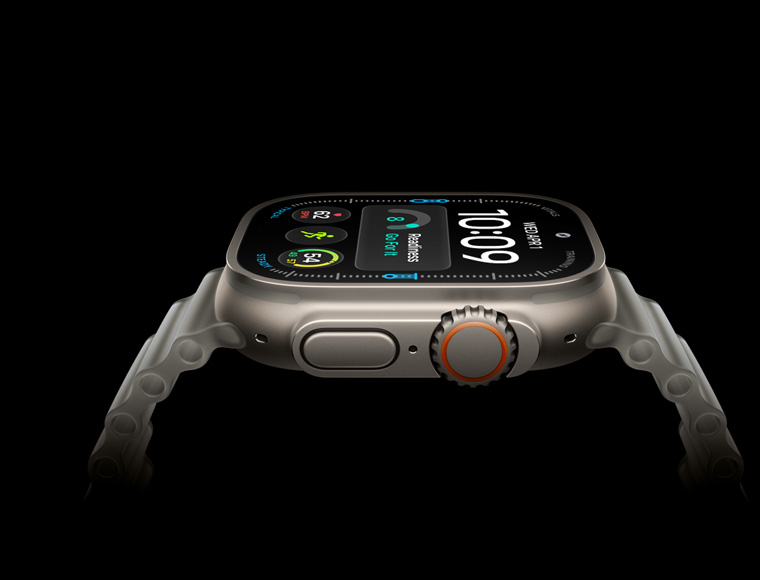
The longest battery life of any Apple Watch: 50 hours of normal use, 84 hours in Low Power Mode, and 45 hours of Max Extended Workout tracking. Apple itself tied that last number to finishing a 100-mile race, which tells you the target user is known, narrow, and not being oversold.
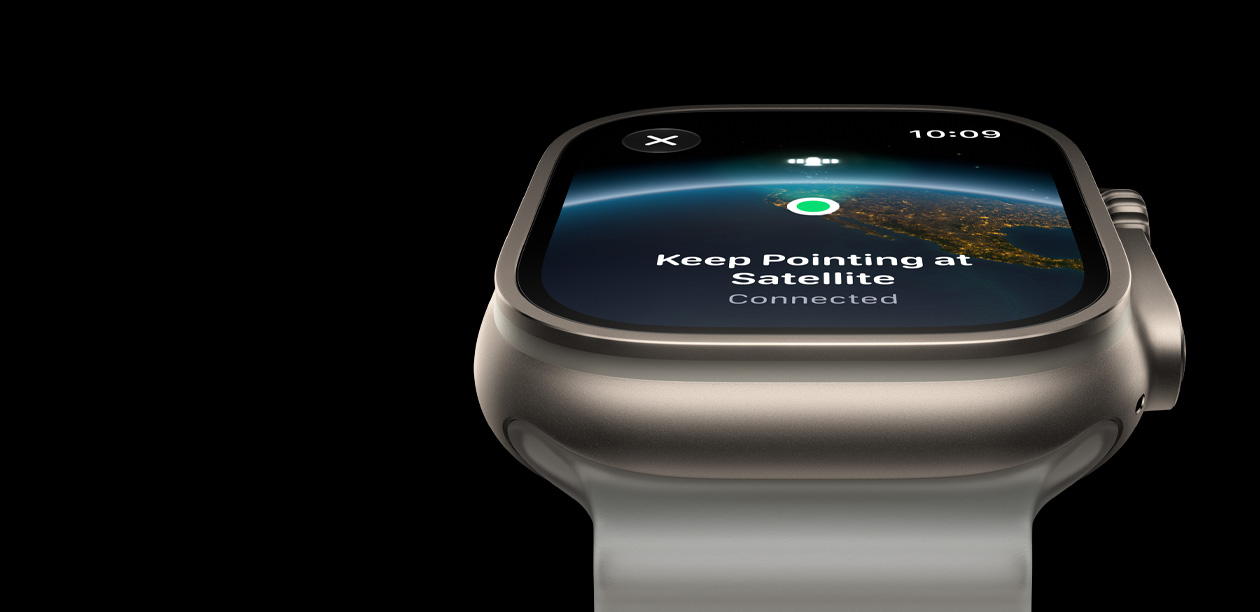
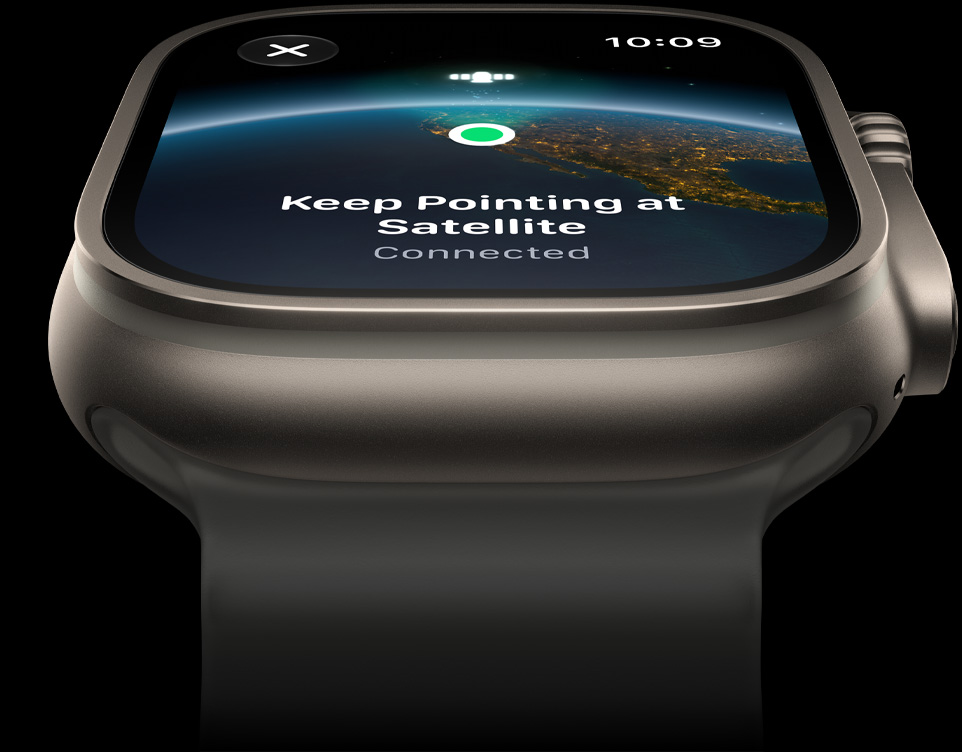
But the real story in Ultra 4 is not the battery. It is built-in Satellite Communications. Fitting an antenna that can reach a satellite in orbit inside a 49mm titanium case is a far harder problem than any battery gain. And it means the watch now has a role independent of the phone rather than remaining an accessory to it: Emergency SOS, Messages, and Find My over satellite, straight from the wrist.
AirPods 5
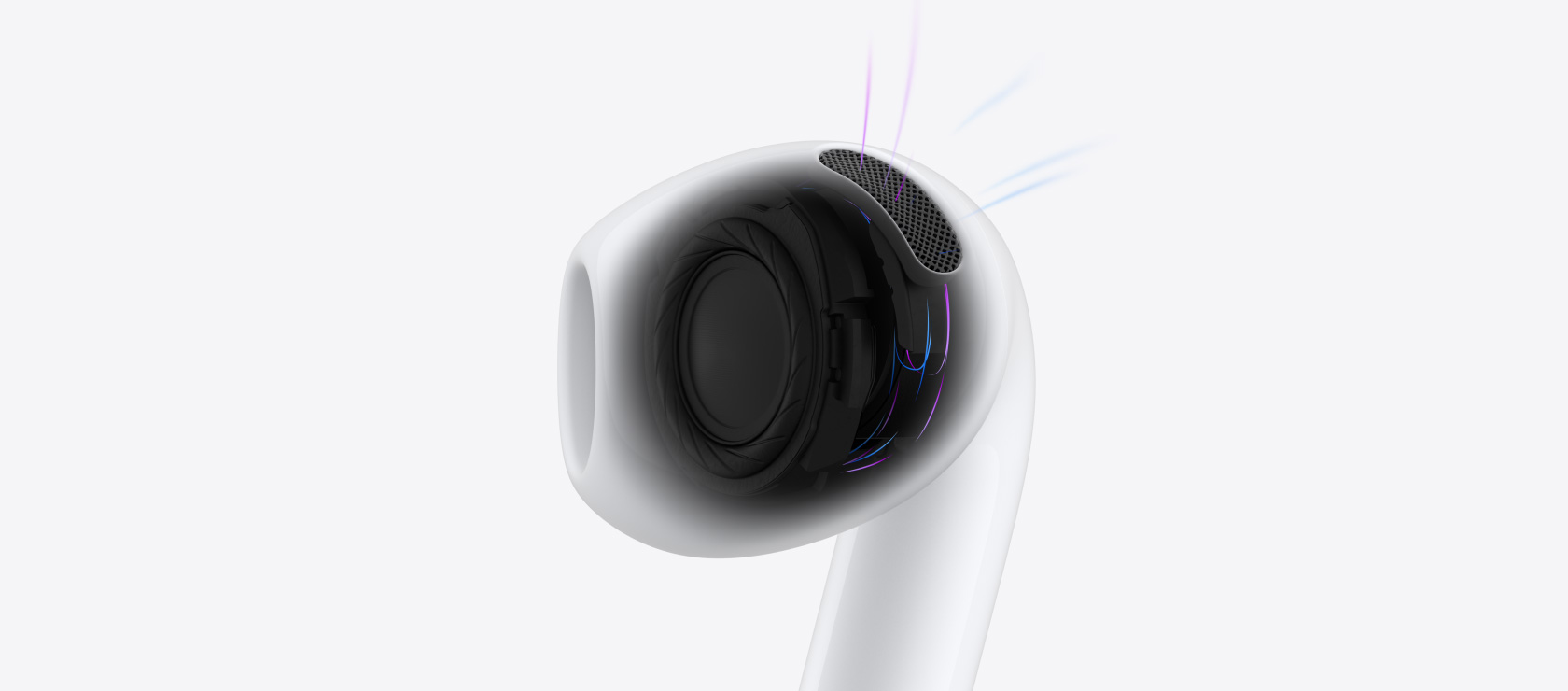
Active Noise Cancellation up to 1.5x stronger than the previous generation, at $129 for the base model and $149 with the Wireless Charging Case. The number alone would read as marketing, but the operative phrase sits at the end of the sentence: “in an open-ear design.”
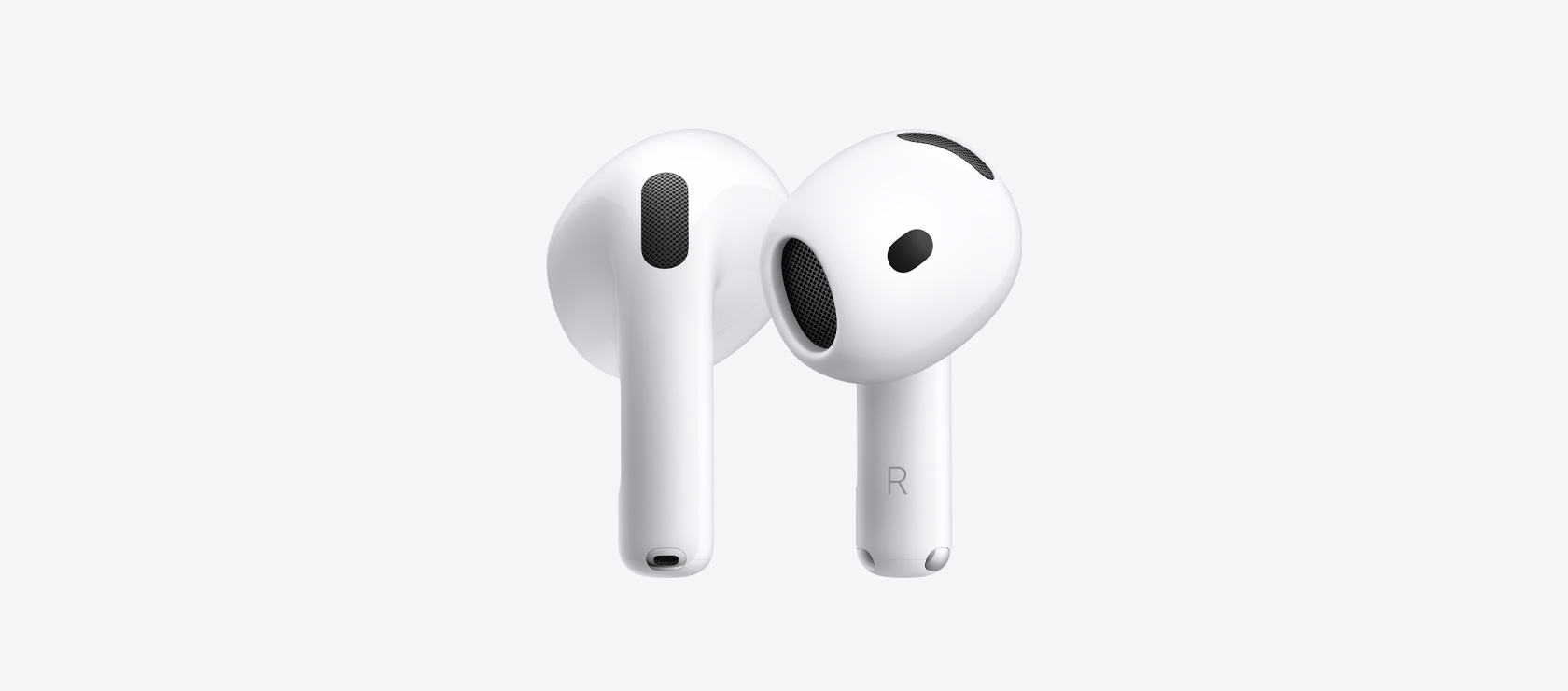
AirPods 5 have no silicone tip sealing the ear canal, which means there is no passive isolation to build on in the first place. Active Noise Cancellation in a design like that is not a question of more processing. It is a question of steering anti-phase waves inside a cavity that is open to the room, which is where the redesigned multiport acoustic architecture and the H2 chip come in. And because Apple scoped the claim with that exact phrase, the claim is precise rather than stretched, and the engineering behind it is harder than it looks.
| Product | Starts at | Pre-order | Available |
| iPhone Duo | $1999 | October 16 | October 23 |
| iPhone 18 Pro | $1199 | September 12 | September 18 |
| Apple Watch Series 12 | $399 | — | September 18 |
| Apple Watch Ultra 4 | $799 | — | September 18 |
| AirPods 5 | $129 | — | September 18 |
Where is the AI in Apple's 2026 event?
Watch only the keynote recap and you will come away thinking AI was absent. The product pages say the opposite: Siri AI appears on all five products without exception, there is new Audio Intelligence on both watches with Live Rewind and Siri Recap, Live Translation on AirPods 5, and a Health app rebuilt around Apple Intelligence with Health Age and Longevity.
The problem is not in the headlines, then. It is in the small print under every feature. Read them back to back and the pattern surfaces on its own.
- Siri AI: “rolling out in English.”
- Audio Intelligence, Live Rewind, and Siri Recap: “coming in beta late 2026.”
- Health Age and the redesigned Health app: “coming late 2026.”
- Live Translation: “available in select languages and regions.”
- Image Playground, Clean Up, and Shortcuts: “usage limits may apply.”
That is the story. Not that AI is missing, but that it is present in the marketing and deferred in the shipping. Hardware has a date: September 18 and October 23. AI has a season: “late 2026.” The difference between a date and a season is the difference between a production line you can schedule and a model that has not cleared the bar yet. If one file defines Ternus's tenure, it is this one.
The best piece of engineering in the whole event is the Audio Intelligence privacy architecture: no audio recordings are created or stored, raw audio is inaccessible even to Apple and is deleted after processing, there is no speaker attribution, and Live Rewind transcripts and Siri Recaps are end-to-end encrypted through iCloud. An always-listening microphone on your wrist needs that architecture before it needs any feature.
What does this mean if you build apps on Apple's platforms?
If you are a developer or sit on a digital product team shipping for iOS or watchOS, three announcements from this event land directly on your desk. The first is that iPhone Duo is not “a big screen and a small screen.” It is six distinct interaction states. And because both displays share an aspect ratio, users will expect the transition between them to be smooth and continuous, so any layout break will show immediately and will be blamed on you rather than on the device.
The second thing is that health data sampling rates jumped by orders of magnitude. Heart rate every five seconds and HRV every five minutes means far more data flowing in. If your app reads from HealthKit, revisit aggregation, storage, and charting now, not after users start complaining that the app feels slow.
The third is that image provenance is now a hardware feature rather than a third-party service. If you run a platform with user-generated content or news distribution, Apple Reference Image is a standard to read and surface, not one to skip. Above all of it, train yourself to read the small print instead of the headline. Phrases like “rolling out in English” and “coming in beta late 2026” tell you more about a platform's roadmap than anything said on stage.
Bottom line
The September 9 event was not a new CEO's showcase, and it was not a break from what came before. It was a demonstration that the manufacturing machine still runs with frightening precision: optically clear adhesives sliding to hide a crease, variable aperture blades inside millimeters, larger green LEDs lifting the sampling rate sixty-fold, and a satellite antenna in a wristwatch. These are exactly the arenas John Ternus came from.
But collect the small print from all five pages and you get one list: everything that is hardware has a ship date, and everything that is AI has a promise. Cook has not disappeared. He moved from running the operation to overseeing it from the board. Ternus started on the field he knows best. The open question is not what the next iPhone looks like. It is whether he can carry that same precision into a file that has no assembly line at all.
Frequently asked questions about Apple's September 2026 event
When is iPhone Duo available and how much does it cost?
What is the difference between iPhone Duo and iPhone 18 Pro?
What is the variable aperture on iPhone 18 Pro?
Does the iPhone Duo display show a crease?
What is new in Apple Watch Series 12?
Does Active Noise Cancellation actually work on AirPods 5?
When will Siri AI support more languages?
Sources8
apple.com
https://www.apple.com/apple-events/
apple.com
https://www.apple.com/iphone-duo/
apple.com
https://www.apple.com/iphone-18-pro/
apple.com
https://www.apple.com/apple-watch-series-12/
apple.com
https://www.apple.com/apple-watch-ultra-4/
apple.com
https://www.apple.com/airpods-5/
apple.com
https://www.apple.com/newsroom/2026/04/tim-cook-to-become-apple-executive-chairman-john-ternus-to-become-apple-ceo/
cnbc.com
https://www.cnbc.com/2026/04/20/apple-names-john-ternus-ceo-replacing-tim-cook-who-becomes-chairman.html